
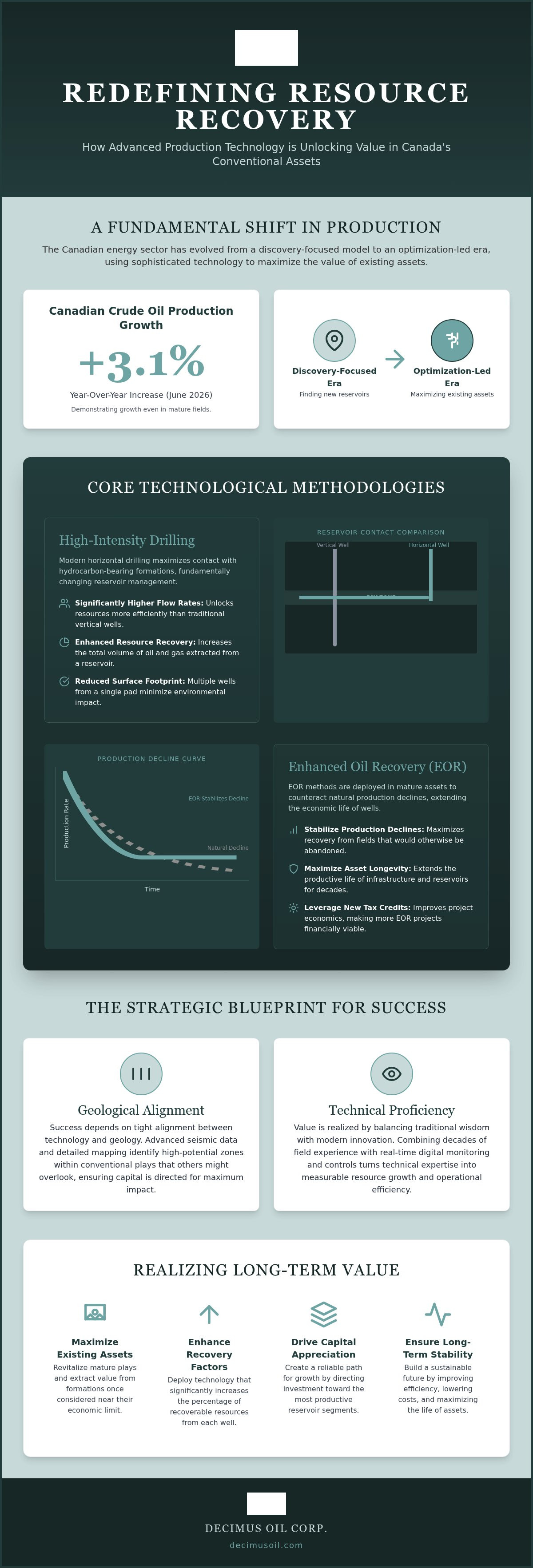
In June 2026, Canada produced 25.6 million cubic metres of crude oil and equivalent products, representing a 3.1% increase from the previous year, even as many conventional fields reached a state of maturity. You likely recognize that the Western Canadian Sedimentary Basin is often viewed through a lens of depletion, which creates uncertainty regarding the longevity of existing assets and the financial viability of high-intensity completions. This production growth isn't a matter of chance; it's the direct result of sophisticated oil and gas production technology being deployed to optimize every barrel and maximize resource recovery across the region.
Discover how modern technological advancements are redefining the efficiency and longevity of conventional assets. We'll provide a clear understanding of current production methodologies, including how enhanced oil recovery (EOR) leverages new tax credits to extend asset life and the critical role infrastructure plays in maximizing efficiency. You'll gain insight into the strategic alignment of technology and resource growth, proving that the future of Canadian energy is driven by calculated innovation and a commitment to realizing long-term value for stakeholders.
Key Takeaways
- Understand how the integration of geology and digital analytics is shifting the industry from discovery-focused models to optimization-led resource development.
- Learn how modern oil and gas production technology, including high-intensity horizontal drilling, significantly enhances flow rates and recovery in conventional assets.
- Discover the critical role of energy infrastructure in maintaining operational efficiency and supporting the entire production lifecycle beyond the wellhead.
- Gain insight into how Enhanced Oil Recovery (EOR) methods stabilize production declines and maximize the longevity of mature assets in the Western Canadian Sedimentary Basin.
- Explore how technical proficiency and strategic resource development are used by sophisticated operators to realize value and drive capital appreciation.
Understanding the Fundamental Shift in Oil and Gas Production Technology
Modern oil and gas production technology has evolved far beyond the simple mechanics of extraction. It now represents a sophisticated convergence of geology, engineering, and digital analytics. This shift marks a departure from the historical discovery-focused era, where growth was driven primarily by finding new reservoirs. Today, the Canadian energy sector is firmly in an optimization-led phase. Operators focus on maximizing the value of existing conventional assets through high-intensity methodologies that revitalize mature plays. This evolution is essential for maintaining global competitiveness, especially as regulatory pressures and market volatility demand higher efficiency.
The history of the petroleum industry in Canada demonstrates a legacy of constant adaptation. By integrating real-time data with proven mechanical processes, companies can now extract value from formations once considered to be nearing their economic limit. High-intensity methodologies aren't just about power; they're about the surgical application of force and technology to unlock resources that were previously inaccessible.
The Role of Technical Proficiency in Resource Growth
Realizing value from complex conventional plays requires a balance of traditional wisdom and modern innovation. Decimus Oil Corp. leverages over 100 years of collective management experience to apply these high-intensity methodologies effectively. This depth of knowledge allows for precise asset characterization, ensuring that digital monitoring tools aren't just collecting data but are actively driving operational decisions. By combining decades of field experience with modern sensors and automated controls, operators can refine flow rates and reduce downtime, turning technical proficiency into measurable resource growth.
Geological Alignment and Strategic Planning
The Western Canadian Sedimentary Basin (WCSB) serves as a critical proving ground for advancing oil and gas production technology. Success in this region depends on tight geological alignment. Using advanced seismic data and detailed geological mapping, operators identify high-potential zones within conventional plays that others might overlook. Strategic planning involves aligning these exploration goals with proven extraction capabilities. This method ensures that every dollar of capital expenditure is directed toward the most productive segments of the reservoir, creating a reliable path for capital appreciation and long-term stability. By focusing on the intersection of geology and engineering, the industry can continue to drive growth from its most established resources.
High-Intensity Methodologies: Advancing Conventional Resource Extraction
The application of high-intensity methodologies represents the current frontier of oil and gas production technology within the Western Canadian Sedimentary Basin. Unlike traditional vertical wells that only intersect a narrow portion of the reservoir, modern techniques focus on maximizing contact with the hydrocarbon-bearing formation. This approach isn't merely about increasing power; it's a strategic effort to enhance the recovery factor of conventional assets that were previously considered mature or declining. By deploying advanced drilling and completion strategies, operators can achieve significantly higher flow rates, making the economics of conventional plays competitive with newer, unconventional discoveries.
Environmental stewardship and production efficiency are no longer mutually exclusive. High-intensity drilling allows for the extraction of more resources with fewer surface disturbances. By concentrating multiple wellheads on a single pad, companies reduce the need for extensive road networks and pipelines, effectively lowering the overall footprint of the operation. This concentration of activity also streamlines logistics and reduces operational costs, providing a clear path for sustainable resource development in a carbon-conscious market.
Horizontal Drilling and Reservoir Contact
The evolution of horizontal drilling has fundamentally changed how we approach reservoir management. Precise lateral placement is now achievable through sophisticated steerable drilling systems that allow operators to stay within the most productive "pay zones" for thousands of metres. These systems utilize real-time telemetry to adjust the drill bit's path, ensuring maximum exposure to the reservoir. Multi-well pad drilling further optimizes this process, allowing a rig to drill several horizontal legs from one location. This method doesn't just improve reservoir contact; it also significantly reduces the time and capital required to bring new production online.
Advanced Completion Techniques for Conventional Plays
Once a well is drilled, the focus shifts to completion techniques that can revitalize flow. Multi-stage completions have become the standard for high-intensity operations, allowing for targeted stimulation along the entire length of the horizontal lateral. This customization is critical; completion designs must be tailored to the specific geological characteristics of the formation to be effective. Recent University of Calgary research into nanotechnology and fluid chemistry highlights how innovation continues to push these boundaries, offering new ways to overcome capillary forces and improve recovery. High-intensity completions are specialized engineering processes that utilize multi-stage stimulation and advanced fluid chemistry to maximize fluid flow from conventional reservoirs.
Overcoming Operational Hurdles: The Role of Digital Integration and Infrastructure
A common misconception suggests that oil and gas production technology is confined strictly to the wellhead or the drilling rig. In reality, modern production efficiency is dictated by the seamless integration of extraction methodologies with robust energy infrastructure. Sophisticated operators understand that technical proficiency in the field is only one half of the equation; the other half involves the strategic management of gathering systems and processing facilities to ensure that every cubic metre produced reaches the market at the lowest possible cost. This holistic approach mitigates the operational hurdles often associated with mature basins, transforming potential liabilities into high-performing assets.
Integrated asset management combines digital insights with physical infrastructure to mitigate risks in hydrocarbon exploration. By maintaining a clear, data-driven overview of the entire production lifecycle, operators can identify bottlenecks and inefficiencies with surgical precision. This level of oversight is what differentiates a standard producer from a sophisticated operator focused on long-term growth and professional integrity. It's about ensuring that the technology used to extract the resource is supported by the systems required to realize its full market value.
Strategic Management of Energy Infrastructure
The synergy between upstream production and midstream capabilities is a primary driver of capital appreciation. Efficient transportation and processing infrastructure are essential for lowering break-even costs, especially in the competitive Western Canadian Sedimentary Basin. By investing in infrastructure upgrades and optimizing gathering systems, companies can maximize the value of existing assets and reduce reliance on third-party processing fees. This integrated model ensures that production isn't just high in volume but also high in margin, allowing for more resilient operations during periods of commodity price volatility. Strategic infrastructure management allows a firm to organize its resources for maximum throughput and minimal waste.
Digital Transformation in the Oil Patch
Digital integration serves as the nervous system of modern energy operations. The deployment of IoT devices and remote sensors across the field allows for real-time data collection, which is critical for production optimization and safety. Predictive maintenance, powered by these digital analytics, enables operators to address equipment failures before they occur, realizing significant cost savings on mature assets that might otherwise face frequent downtime. Beyond the field, these data streams inform capital allocation decisions, ensuring that investment is directed toward the most efficient and profitable opportunities. This evolution in oil and gas production technology provides the transparency needed to instill confidence in stakeholders and drive results-oriented performance.
Enhanced Oil Recovery (EOR): Maximizing Asset Longevity and Value
Enhanced Oil Recovery (EOR) represents the strategic bridge between initial extraction and the full realization of a reservoir's potential. It is categorized into three distinct stages: primary recovery, which relies on natural reservoir pressure; secondary recovery, typically involving water or gas injection; and tertiary recovery, which utilizes advanced thermal, chemical, or miscible gas injection. For sophisticated operators in the Western Canadian Sedimentary Basin, EOR is no longer an optional secondary phase but a fundamental component of modern oil and gas production technology. By implementing these methods, companies can effectively double or even triple the total volume of hydrocarbons recovered from a single field over its lifetime.
This technology is essential for extending the economic life of Canadian oil fields. Rather than abandoning assets once natural pressure declines, EOR allows for stabilized production rates and predictable long-term cash flows. As of April 28, 2026, the federal government's expansion of the CCUS Investment Tax Credit to include EOR projects has further incentivized these operations. With tax credit rates of up to 30% for capture equipment and 18.75% for transportation and storage equipment, the financial case for revitalizing mature assets has never been stronger. This regulatory support aligns perfectly with the industry's focus on maximizing the longevity of existing infrastructure.
Waterflooding and Pressure Maintenance
Waterflooding remains the most prevalent secondary recovery method in conventional reservoir management. The mechanics involve injecting water into the formation to displace oil toward production wells, thereby maintaining reservoir pressure. Success depends on optimizing injection patterns to improve sweep efficiency, ensuring that the water moves evenly through the rock rather than bypassing trapped oil. These low-decline oil assets provide a stable foundation for a diversified energy portfolio, offering reliable production growth with reduced exploration risk. By maintaining pressure, operators can ensure that mature fields remain profitable for decades.
Advanced EOR Techniques for Mature Assets
Beyond waterflooding, advanced EOR techniques like chemical and thermal injection are revitalizing energy assets across specific Canadian formations. These advancements in oil and gas production technology alter the physical properties of the oil or the rock to release trapped resources. Decimus Oil Corp. utilizes these methodologies, backed by over 100 years of collective management experience, to drive capital appreciation through disciplined Enhanced Oil Recovery programs. For junior energy firms, EOR projects offer a superior return on investment by significantly increasing the recovery factor of proven reserves without the high capital risk of greenfield exploration.
Strategic Resource Development: Realizing Value Through Technical Proficiency
Realizing value from mature energy assets requires more than just mechanical intervention. It demands a strategic alignment between technical proficiency and corporate growth objectives. Efficiency drives value. In the junior energy markets, operational efficiency serves as the ultimate differentiator, allowing smaller, more agile operators to outperform larger competitors by focusing on margin rather than just volume. By deploying modern oil and gas production technology, companies can transform conventional assets into high-yield, low-risk engines of growth. This results-oriented approach ensures that capital is deployed where it can generate the highest return, grounded in decades of technical expertise and a deep understanding of the regional landscape.
The future of the WCSB will be defined by this intersection of innovation and discipline. As regulatory requirements for methane reduction and carbon intensity tighten, the role of oil and gas production technology will expand to include sophisticated emission monitoring and carbon capture integration. Operators who've already established a foundation of technical proficiency are best positioned to lead this transition. This evolution ensures that the Canadian energy sector remains a global leader in both production efficiency and environmental stewardship, providing a stable and profitable environment for long-term resource development.
Decimus Oil Corp.'s Approach to Production Tech
Decimus Oil Corp. leverages over 100 years of collective management experience to identify and revitalize high-potential conventional plays. Their strategy isn't built on speculative exploration but on the application of proven recovery techniques to assets with established histories. By maintaining a strategic portfolio of energy infrastructure, they support their conventional exploration efforts with the midstream capacity needed to minimize costs and maximize throughput. High levels of insider ownership ensure that every tech adoption decision is made with a focus on long-term shareholder value. This commitment to professional integrity and technical excellence allows Decimus to navigate the complexities of the WCSB with a calculated, visionary perspective.
The Investment Case for Tech-Enabled Conventional Oil
For those seeking exposure to resource development, public equity in tech-enabled producers like Decimus Oil Corp. (TSXV:WCSB) offers a compelling investment case. Technology serves as a powerful tool for risk mitigation, turning the uncertainty of conventional drilling into a predictable engineering exercise. By improving capital efficiency through multi-well pads and advanced completions, these firms can realize significant value even in volatile commodity price environments. The long-term outlook for the Canadian energy sector remains optimistic, as technical innovation continues to unlock new potential in established basins. Investors can benefit from a landscape where strategic alignment and technical proficiency drive sustainable production growth and capital appreciation.
Driving Future Growth Through Technical Excellence
The energy landscape in the Western Canadian Sedimentary Basin is undergoing a profound transformation. The integration of high-intensity methodologies and robust digital monitoring has shifted the industry from simple extraction to complex optimization. These advancements in oil and gas production technology ensure that conventional assets remain competitive and productive for decades to come. By leveraging enhanced oil recovery and strategic infrastructure management, sophisticated operators can effectively stabilize production declines and realize significant long-term value from mature fields.
Decimus Oil Corp. stands at the forefront of this evolution, combining a management team with over 100 years of combined experience with a disciplined focus on maximizing WCSB asset value. As a publicly traded entity on the TSX Venture Exchange (TSXV:WCSB), we focus on the intersection of proven methodologies and modern innovation. We invite you to learn more about Decimus Oil Corp.'s strategic approach to energy production. The future of Canadian energy is anchored in technical proficiency and strategic alignment. This commitment to excellence ensures that the basin remains a cornerstone of global energy security and economic prosperity.
Frequently Asked Questions
What is the primary goal of oil and gas production technology?
The primary goal is to maximize the recovery factor of hydrocarbon resources while optimizing operational efficiency and lowering break-even costs. By integrating geology, engineering, and digital analytics, this technology allows operators to extend the economic life of conventional assets. It focuses on realizing the full value of a reservoir through precise extraction and strategic resource development, ensuring that production remains sustainable and profitable in a competitive global energy market.
How does horizontal drilling differ from traditional vertical drilling?
Horizontal drilling differs from vertical drilling by significantly increasing the surface area of the wellbore that remains in contact with the reservoir. While vertical wells only intersect a narrow portion of the formation, horizontal laterals can extend for thousands of metres through the most productive zones. This maximized exposure allows for higher flow rates and the recovery of resources from complex or tight formations that were previously inaccessible using traditional vertical methods.
What are the three main stages of enhanced oil recovery (EOR)?
The three main stages of enhanced oil recovery include primary, secondary, and tertiary recovery methods. Primary recovery relies on natural reservoir pressure to drive hydrocarbons to the surface. Secondary recovery involves injecting water or gas to maintain pressure and displace oil. Tertiary recovery, often called advanced EOR, utilizes thermal energy, chemicals, or miscible gases to alter the oil's properties. These stages are critical for maximizing the longevity and value of conventional energy assets.
Why is energy infrastructure management important for production efficiency?
Energy infrastructure management is essential because it dictates the cost and speed at which hydrocarbons move from the wellhead to the market. Efficient gathering systems, pipelines, and processing facilities lower break-even costs and reduce operational downtime. It's the strategic management of these midstream capabilities that allows operators to maximize throughput and reduce reliance on third-party services, directly improving the capital efficiency of resource development projects across the country.
How does digital technology improve safety in oil and gas exploration?
Digital technology improves safety by providing real-time monitoring and predictive analytics that alert operators to potential equipment failures or hazardous conditions before they occur. The use of IoT sensors and remote monitoring systems reduces the need for manual inspections in high-risk areas, minimizing personnel exposure to dangerous environments. It's about ensuring that operations remain results-oriented while maintaining the highest standards of professional integrity and institutional stability in the field.
Can conventional oil fields be revitalized using modern technology?
Yes, conventional oil fields can be revitalized through the application of modern oil and gas production technology such as high-intensity completions and EOR. These methodologies allow operators to bypass capillary forces and extract trapped hydrocarbons from mature reservoirs. By deploying advanced stimulation techniques and secondary recovery methods like waterflooding, companies can effectively reverse production declines and extend the economic lifespan of assets that were once considered to be nearing depletion.
What role does the WCSB play in Canadian energy technology innovation?
The Western Canadian Sedimentary Basin (WCSB) serves as a premier proving ground for innovation in oil and gas production technology. Its diverse geological formations provide unique challenges that drive the development of specialized drilling and completion techniques. As a result, the region has become a global centre for technical proficiency, where sophisticated operators refine methodologies like horizontal drilling and enhanced recovery to maximize resource growth and maintain Canada's position as a leader in energy production.
How do high-intensity completions impact production rates?
High-intensity completions impact production rates by utilizing multi-stage stimulation and advanced fluid chemistry to unlock higher volumes of hydrocarbons from conventional formations. This process involves creating more fracture points along a horizontal lateral, which facilitates a more rapid and efficient flow of oil and gas to the wellbore. By customizing completion designs to specific geological characteristics, operators can realize significantly higher initial production rates and improved long-term recovery factors for their energy assets.


